

MIRJANA MALESKA: UNIVERSITIES ARE A DIFFERENT WORLD – DISCONNECTED FROM THE REALITY OF THE LABOR MARKET
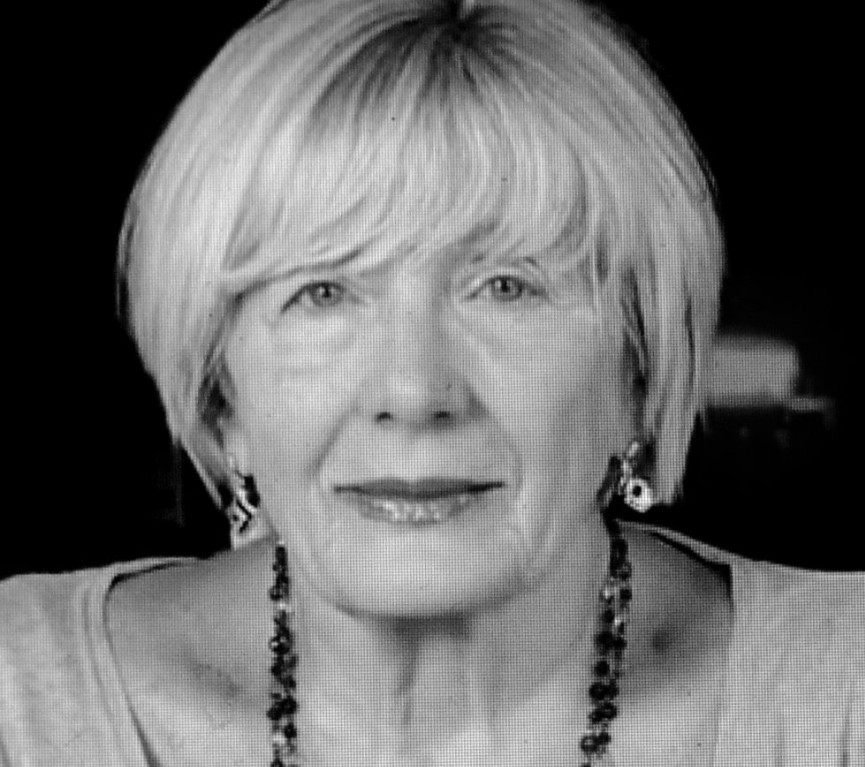
Interview: Mirjana Maleska, university professor
At a moment when North Macedonia is expected to open key chapters in negotiations with the European Union, including Cluster 3 on education and innovation, Professor Mirjana Maleska warns that reforms in education must start from the foundation – from the way we educate and prepare the youngest generations. In an interview for the BIRC Institute, she sharply criticizes the excessive burden of school curricula, outdated university textbooks, and resistance to change, which, she says, keep the education system trapped in the past.
“We have the complex of a small nation, and that means we build ‘Potemkin villages’ in education,” Maleska stresses, calling for a sincere and profound transformation at all levels of the education system.
Cluster 3 of the EU negotiations concerns reforms in education. How close are we to European standards and what needs to change?
Mirjana Maleska: Thank you for the invitation to participate in this interview, because I feel the need to say something as a professor with many years of experience. I have not specifically seen what Cluster 3 contains, but I am a witness to how education functions in practice. I will start from the basics. I have a nephew in the sixth grade and I help him with his studies. I am deeply disappointed by the way we, as a society and as educational institutions, have understood the importance of primary education, on which higher education is later built.
In short: we have the complex of a small nation, which in practice means we are megalomaniacs who build “Potemkin villages.” The programs and textbooks for students in primary education are overly ambitious, beyond the capabilities of an average child. The schoolbag that a ten-year-old carries on their back (only younger children use bags with wheels) weighs six to seven kilograms. This is a crime against children and their spines. Where are all the declarations about children’s rights and health here? Every day new lessons are added and very little time remains for repetition and proper understanding of the material. The textbooks are also very large, written in a way that is not appropriate for the age group, with too much text and small letters.
Teachers have certainly noticed this, so they often skip lessons or dictate shortened versions. Some books we returned almost new and unopened. This is not good education. This is, as I said, the megalomania of a small nation. A small number of children can follow the program at this pace, and it is fine that advanced programs exist for them. But most are not like that. Among them are children with learning difficulties, autism, dyslexia, dyscalculia, attention deficit syndrome, and others. In the end everyone passes, perhaps even with good grades, but without real education. Almost all children attend additional courses in mathematics or languages, which places a burden on family budgets. Does anyone think about that?
At universities, speaking about the field I know best – law, administration, and social sciences – education is also unsatisfactory. Students at some faculties, for example, study from textbooks that are very outdated in every sense. The authors are former professors who did not build a name in their field. The literature recommended to students is only formally aligned with European standards. The titles of subjects and curricula have been modernized, but few actually follow them. In essence, today we still study as we did 20, 30, or even 50 years ago. Even though artificial intelligence exists today, exams are still based on those books and lectures.
At the university where I taught, at least when I was still active, a decision was made to encourage professors to publish textbooks for the courses they taught themselves. This created an inflation of books, written in a short time without serious peer review. The weakness of education is best seen during exams. I do not know if anyone has looked at students’ tests. Most answers are superficial, choosing between “a,” “b,” and “c,” while written responses are at a very low level of literacy. Monitoring of the educational process, which was introduced in universities, has somewhat improved the situation, but not enough.
Is the Bologna Process effectively implemented and does it ensure mobility for students?
Mirjana Maleska: The Bologna Process, especially in the faculties of social sciences, produced an inflation of master’s degrees without serious criteria for preparing master’s theses, because due to the large number of students everything was reduced to a formality. A significant number of them then continued to doctoral studies, which at one point meant simply preparing a dissertation without exams and without scientific publications. In this way we produced a generation of weak academic staff who later, in various ways, entered universities. Today they are the educators.
Later, stricter criteria for doctoral studies were introduced – exams, public defense, published papers – and the situation improved. As for mobility, I do not know exactly, but it can be checked with concrete data. However, I would not say that it is high.
The Ministry has formed a National Coordinating Body for reforms in higher education and science. Do you believe the much-promised reforms will be implemented?
Mirjana Maleska: The idea is good, but everything depends on the people who will be part of that coordinating body. They should be experienced and established professors from different fields who will work seriously. I wonder: what will happen to their reports?
Let me share one experience. Professors from an American university came to help us, professors of public administration, modernize the curricula. They took us to Struga, to a beautiful hotel, for three days. Collective debates began about which core subjects should be taught in the first year. Almost every professor believed their subject was essential and had to remain in the program. Tension arose and the debate turned into arguments. The Americans tried to find a middle solution. The same thing happened for the other study years. No professor accepted that their subject should be removed from the program, so they would not lose teaching hours. In the end, a compromise program was prepared that should have been implemented – but it was not implemented in the years that followed.
I concluded that personal interests are so strong that every reform faces unbelievable resistance.
How can awareness be raised among the public and the academic community about the importance of the Bologna Process?
Mirjana Maleska: I think awareness must be raised about the importance of good education, which includes all levels. Let me share another experience. We university professors often had to take the role of school teachers because, despite formal selection, universities admitted students with very low levels of education and literacy. It is unacceptable for the alphabet to be taught at university. Everyone has their place and responsibility in the process.
Our education system is stuck in the past.
The education system does not follow the real demands of the labor market
Does the education system follow the real demand of the labor market, considering the gap between unemployed people and available jobs?
Mirjana Maleska: I think it does not. We must look at what is actually required in our labor market. At the moment, what is most needed is vocational secondary education and, above all, work experience.
My daughter, with higher education, a master’s degree, and another faculty degree in foreign languages, barely found a trial job in a private hospital. University education, except in certain specific fields such as medicine or engineering, is not highly valued. Graduates work online for foreign companies, mostly in technical, administrative, or sales jobs. Many of them are paid little and their contracts can be terminated at any moment.
Usually they do not have health or social insurance, or to obtain it they must open companies as individuals, which is not beneficial for them. What is mainly required is excellent knowledge of foreign languages and computer programs, something that is very rarely present in our universities. They are simply a different world compared to the real needs of the labor market.
North Macedonia invests less than 1% of GDP in science
North Macedonia allocates less than 1% of GDP to science and innovation. How does this affect social and economic development?
Mirjana Maleska: There are very few research projects, and some have been completely discontinued. This is fatal for higher education institutions with a practical orientation and for their students. In the end we get many diplomas on paper, but little real knowledge.
Is the education system prepared for digital transformation and the integration of new technologies in teaching?
Mirjana Maleska: I do not know whether the system is prepared, but to become prepared, teachers must undergo more training and technical tools must be provided for the use of artificial intelligence.
Students already use technology themselves to learn more, but people working in education must guide them and help them distinguish valuable content. Copy-paste from artificial intelligence is not a way to gain knowledge, but only to fulfill a formality. Teachers themselves must also be well prepared to use modern technology creatively. Ask how many trainings have been held on this topic – and you will get the answer.
The “small nation complex” keeps us away from European education
How can brain drain be prevented, considering that many young people leave the country after finishing their studies?
Mirjana Maleska: Opportunities must be created for qualified staff to work in the country, and for that development is necessary. Of course, our country is progressing, but the question is whether it is progressing fast enough. Clearly, it is not.
Low salaries, lack of respect for rules, party-based employment, and corruption push young people to seek their future elsewhere. Until these problems are solved in a systemic way, it is difficult to expect young people to stay, even when they want to.
The road to Europe passes through the classroom
Universities often rank low on international lists. What reforms would help improve the quality and internationalization of higher education?
Mirjana Maleska: Universities must know exactly which criteria rankings are based on and set achieving them as a goal. Some of those criteria – such as funding for science and research – depend on the state, but others must be achieved through the efforts of universities themselves.
I would say that synchronized and coordinated cooperation between the state and universities is needed to improve education and, consequently, international rankings.
How can fair and transparent funding for scientific research and projects in higher education be ensured, especially considering the frequent politicization of institutions?
Mirjana Maleska: Unfortunately, I do not have an answer to that question. We are a deeply divided society along party and ethnic lines, and only frequent changes of power and the “shaking” of institutions from arbitrariness and impunity – where someone will actually be held accountable for their actions – can eventually make us more reasonable.
This text was developed within the project “Representation for Inclusive Development,” financially supported by the Government of Switzerland through the Civica Mobilitas program.
The content of this text is the sole responsibility of the Forum for Reasonable Policies, IOHN, and BIRC and cannot in any way be considered to reflect the views of the Government of Switzerland, Civica Mobilitas, or its implementing organizations.