

UNIVERSITY PROGRAMMES UNDER THE REFORM SPOTLIGHT: WHAT NEEDS TO CHANGE IN HIGHER EDUCATION?

The current system for accrediting university study programmes in North Macedonia does not always manage to assess the quality and relevance of higher education, as it focuses more on fulfilling technical requirements rather than examining whether study programmes correspond to the real needs of society and the economy.
This is the assessment of Professor at the Institute of Social and Human Sciences (IOHN) and Vice-President of the Economic Chamber of North Macedonia, Marjan Bojadzhiev, who says that the lack of flexibility in the accreditation system makes it more difficult for universities to quickly adapt to changes in the labour market.
According to him, university programmes have for years remained insufficiently aligned with real needs, while the reaccreditation process often remains focused on technical elements.
“The problem is that the current accreditation system is very slow. Reaccreditation is based on meeting certain technical conditions, such as the number of toilets, square metres and so on. Nobody looks at the essence – whether those programmes respond to the needs of the community or how effective they have been in the previous period,” says Bojaxhiev.
He believes that the new package of higher education laws represents a positive step, as it provides universities with greater opportunities to respond more quickly to changes and introduce new subjects and curricula.
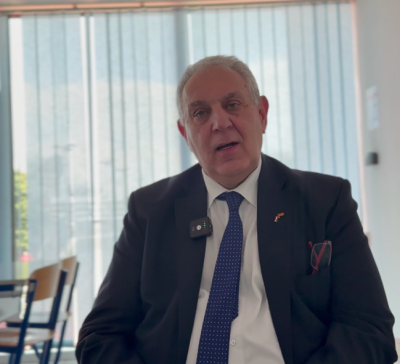
“The new package of higher education laws, de facto, solves this problem as well, because it is much more flexible in terms of introducing new subjects and curricula,” Bojaxhiev says.
According to him, improving the quality of higher education also requires stronger links between universities and the private sector. He emphasises that experts from professional practice and business representatives should have a greater role in evaluating students, including during the defence of undergraduate and master’s theses.
Another important element, according to Bojaxhiev, is the development of dual education at the university level. He notes that this model has already become a standard in secondary vocational education, while the Chamber of Commerce has long advocated for its introduction in higher education as well.
“Dual education has now become a standard in secondary education. The Chamber of Commerce has been advocating for its implementation in higher education for a long time. Most likely, that is the direction we will move towards,” he says.
Bojaxhiev believes that education reforms, changes in the financing model, and the implementation of the new legislative package, particularly regarding the quality of higher education, can have a positive impact on improving the system.
This material was developed within the project “Advocacy for Inclusive Development,” financially supported by the Government of Switzerland through the Civica Mobilitas programme.
The content of this text is the sole responsibility of the Forum for Reasonable Policies, IOHN and BIRC and in no way can be considered to reflect the views of the Government of Switzerland, Civica Mobilitas or the implementing organisations.
