

ELMEDINA ABDULAHI: WOMEN AND YOUTH – SPECTATORS IN LOCAL DECISION-MAKING
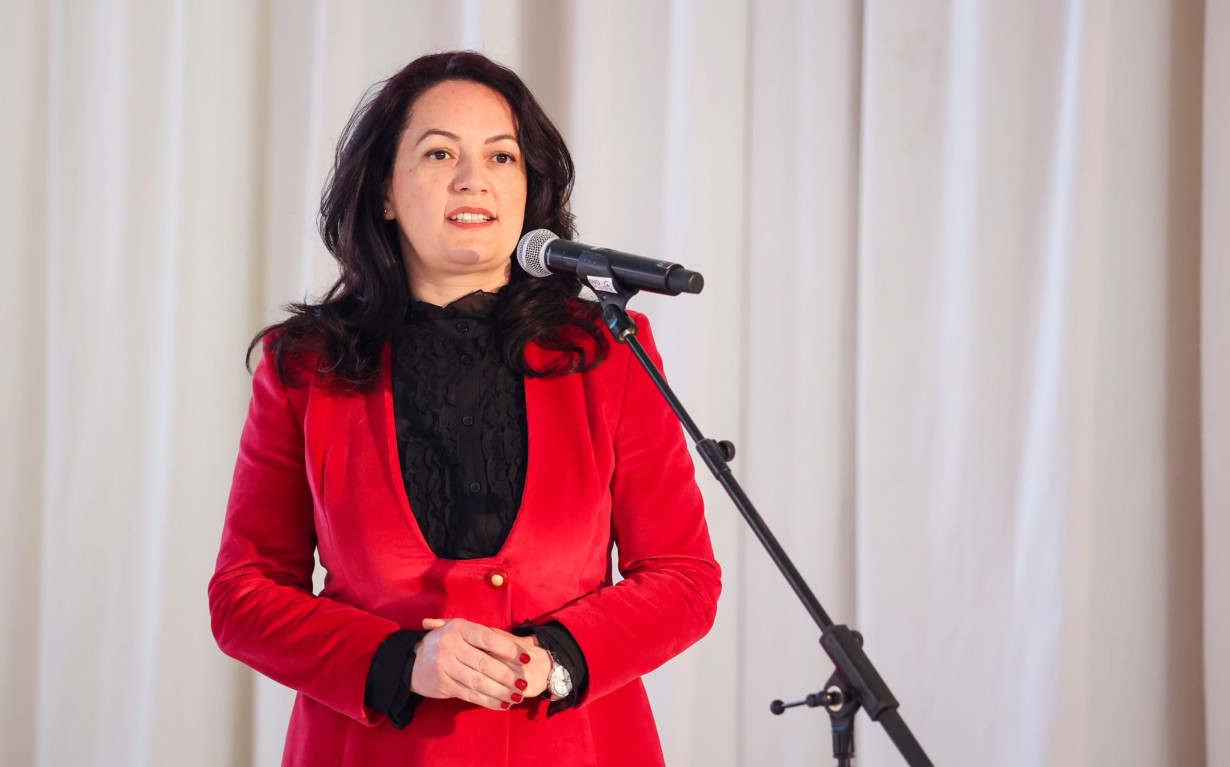
Despite legal quotas and formal obligations, the representation of women, youth, and smaller ethnic communities in local government still falls short of real influence. Activist Elmedina Abdulahi, in an interview with BIRC, warns that a purely formal approach risks turning local democracy into a closed and exclusive process. She emphasizes that the energy of young people, the perspective of women, and the voices of minorities could become pillars of local development—but only if municipalities move from symbolic representation to substantial, inclusive participation.
BIRC: How do you assess the state of representation for women, youth, and smaller ethnic communities (Turks, Roma, Serbs, etc.) in local decision-making?
ELMEDINA ABDULAHI: Representation remains insufficient. While the law mandates equal inclusion and women are protected by electoral quotas, in practice this often remains symbolic—aimed only at meeting the minimum legal requirement without granting real roles, equal influence, or space for active political contribution.
This creates a largely symbolic presence, leaving these groups outside real decision-making and limiting their ability to impact community development. According to 2024 monitoring data, about 40% of municipalities have established youth councils, but many remain inactive. A similar pattern is observed for women and minority communities, where quotas are often formally respected without enabling genuine participation or impactful decision-making.
BIRC: How motivated are young people, women, and minority representatives to participate in this process?
ELMEDINA ABDULAHI: Many are motivated and still hope for change, even though the current political climate has caused disappointment. Unfortunately, well-intentioned participants often lack real access, while those who challenge the status quo are excluded or marginalized, preserving a framework dominated by male leadership.
BIRC: How can awareness be raised among local authorities and the public regarding the need to include these groups in decision-making?
ELMEDINA ABDULAHI: First, municipal leadership must listen to community feedback, distinguishing constructive criticism from baseless complaints. Considering the wider community’s voice allows more inclusive and appropriate solutions. This is only possible when decision-makers act in service of the community rather than narrow group interests.
Civil society and NGOs play a key role as bridges between citizens and institutions. Transparency and accountability are essential: by publishing data on representation and outcomes, citizens can monitor compliance and demand accountability. Positive results encourage continued engagement in decision-making processes.
BIRC: Do the media provide adequate space for candidates or elected officials from these groups?
ELMEDINA ABDULAHI: In my experience, many media outlets provide sufficient space, often publishing positions and reactions without hesitation. Social media profiles and online platforms also serve as effective channels, provided the content is accurately represented and contextualized.
BIRC: How do you evaluate the role of youth councils where they exist?
ELMEDINA ABDULAHI: Youth councils are important because they give young people space to voice ideas and concerns and participate in decision-making. Their effectiveness depends on municipal willingness to treat them as serious partners and provide real influence, as well as the level of engagement from the youth themselves. Without these elements, councils risk remaining formal structures with no real impact, created merely to meet legal requirements or access funding.
BIRC: How can representation of these groups be improved to ensure meaningful participation?
ELMEDINA ABDULAHI: True improvement requires moving beyond formal compliance toward substantial engagement. Participation must be valued as a real asset for community development, not just a tool for media exposure or narrow political gain. Genuine engagement, where ideas and needs are respected and translated into concrete policies, is key to achieving equal and inclusive participation.
BIRC: How can the quality of their representation be strengthened?
ELMEDINA ABDULAHI: Equal, politically independent conditions are essential. When women, youth, and minority representatives can contribute freely to policy-making, their input gains real weight and enhances decision-making quality. Their suggestions reflect authentic community needs and should be taken seriously by institutions.
This interview is funded by the European Union under the project Voices of Equality, Democracy for All, implemented by the Balkan Institute for Regional Cooperation – BIRC Tetovo. The project is a subgrant under EU Support for the Civil Society Resource Center – Phase 2, funded by the European Union. The content is the sole responsibility of the project and does not necessarily reflect the views of the European Union or the Civil Society Resource Center.