

Enis Shaqiri Wins OSCE First Prize for Journalism on Digital Violence
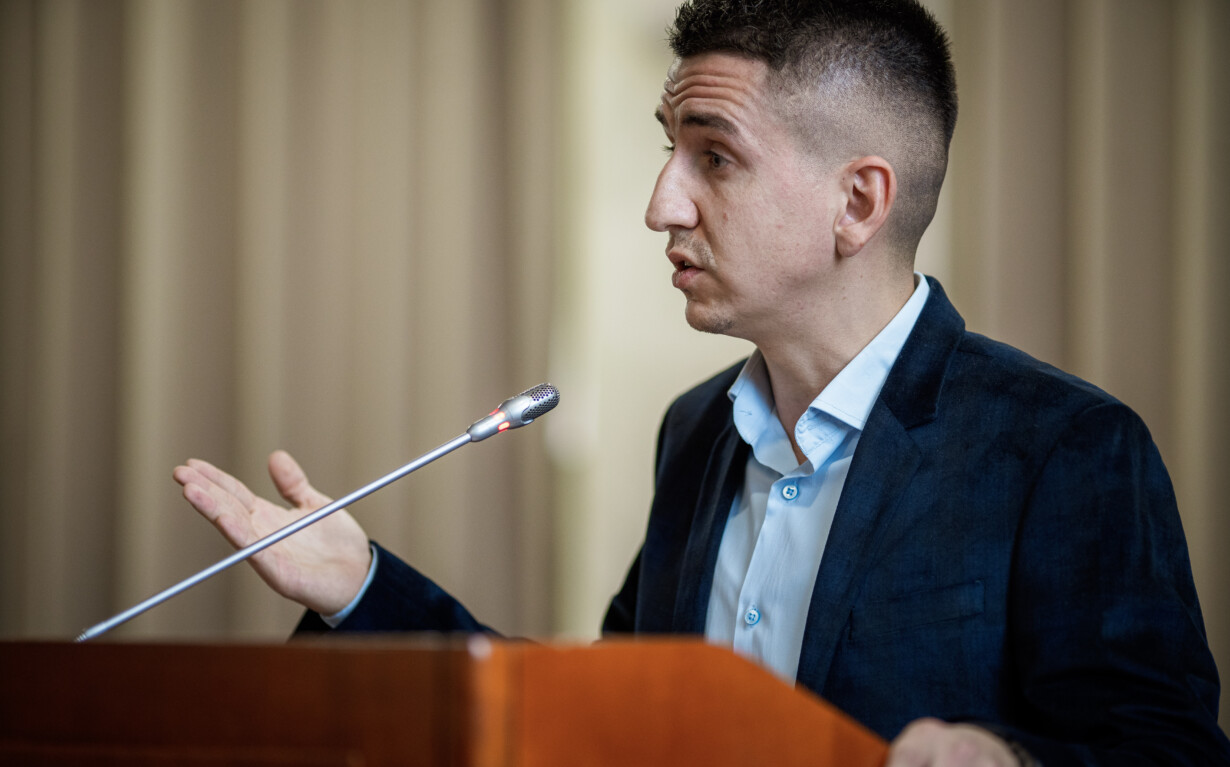
Enis Shaqiri, journalist and researcher at the Balkan Institute for Regional Cooperation (BIRC), has won first prize in the Open Call launched by the OSCE Mission to Skopje for media stories addressing the digital dimension of violence against women and girls.
Shaqiri received the award for his investigative story titled “It Started with a Fake Instagram Account and Ended with Stalking in Real Life: Women in North Macedonia Face Violence That Does Not Stop at the Screen”, which examines online threats and stalking targeting women, as well as the consequences this form of violence can have beyond the digital space.
The award was presented on Wednesday during an event organised by the OSCE Mission to Skopje as part of the “16 Days of Activism against Gender-Based Violence” campaign. The event recognised the three highest-rated media stories submitted under the Open Call.
Speaking about his experience during the investigation, Shaqiri emphasised that attention should not focus solely on raising public awareness, but also on preparing institutions to respond to cases of digital violence.
“We cannot educate everyone in this country, but we can train institutions and the people who work in them. Those who work with victims need to understand what they are going through and know how to respond with care and respect. Victims should never feel ashamed or responsible for what has happened to them,” Shaqiri said.
He also highlighted the importance of journalism in addressing these issues, noting that behind every statistic there is a real person and a real story, and that telling these stories can be the first step towards making the problem visible.
The Balkan Institute for Regional Cooperation (BIRC) welcomes this recognition and congratulates Enis Shaqiri on receiving the award and on his contribution to addressing issues of public interest through investigative journalism.
The second prize was awarded to Llausha Zenuni for her story “I Stayed Silent, Monika Reported It: Two Stories of Digital Violence”, while the third prize went to Gabriela Leskova from Sitel TV for her television report “Digital Violence as a Real Threat”.
As part of the event, two panel discussions were also organised, addressing the themes explored in the winning stories, the consequences of digital violence, barriers to reporting, access to support and institutional accountability. Members of the OSCE Mission’s Youth Advisory Group actively moderated the discussions, while the authors of the winning stories contributed their perspectives based on their journalistic work and experiences.
According to research published by the OSCE Mission earlier this year, involving 600 young women aged 18 to 29, 86 per cent of those who had experienced or witnessed gender-based violence or online harassment had not reported it. Among those who did not report the incidents, 31 per cent said they lacked sufficient information about where to seek help, while 28 per cent cited a lack of trust in institutions.
“Awareness is important, but awareness alone does not protect anyone. It must lead to prevention, protection and effective accountability,” said Dr. Susan Penksa, Acting Head of the OSCE Mission to Skopje.
She also emphasised the importance of establishing mechanisms that enable women and girls to report abuse safely, ensuring effective institutional responses and building trust in protection mechanisms.
The event also highlighted the role of responsible journalism in addressing digital violence by bringing the issue to public attention, challenging victim-blaming and respecting the privacy and dignity of survivors.
You can read journalist Enis Shaqiri’s award-winning story below: