

IT IS NECESSARY TO CLEARLY DISTINGUISH BETWEEN TEACHING-SCIENTIFIC AND TEACHING-ARTISTIC CRITERIA
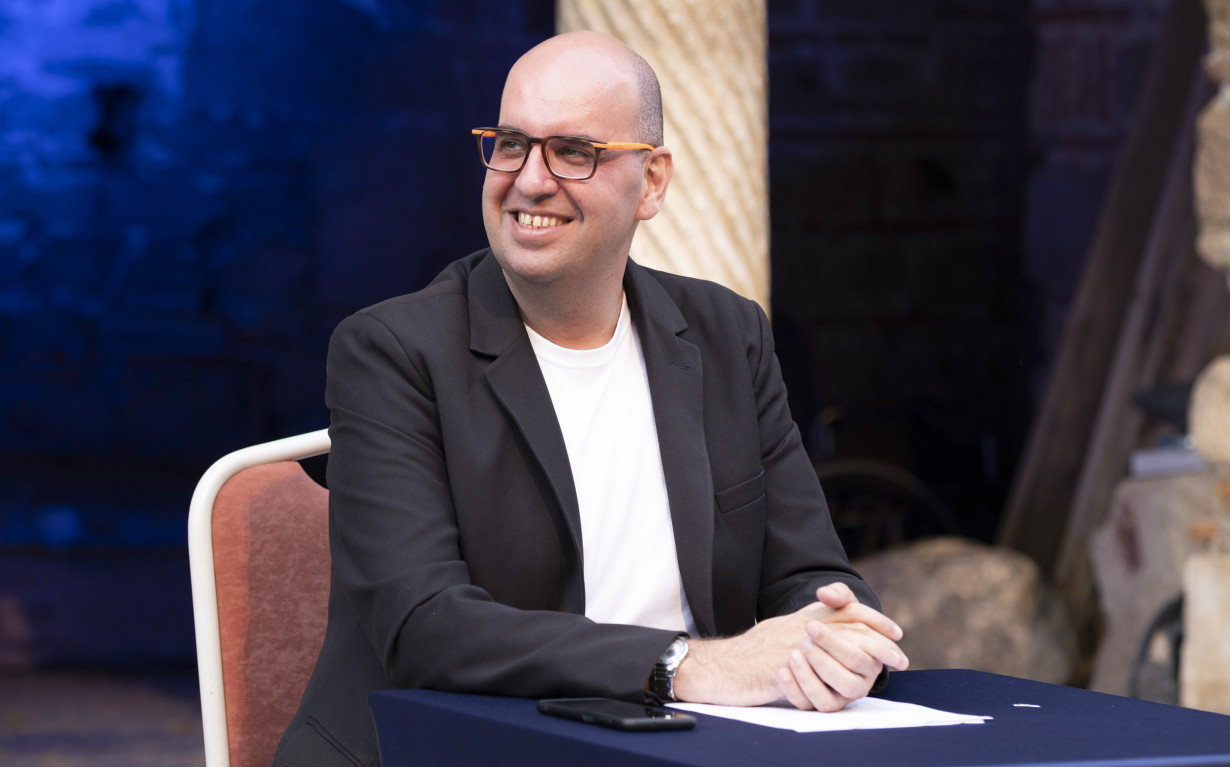
Analysis of higher education with a focus on the proposed law of the Ministry of Education and Science
Prof. Dr. Aleksandar Trajkovski
The tendency of every new law, in general, including laws on higher education, is to adopt acts that will be better and of higher quality than the previous and existing ones, thereby contributing to its development and advancement. Most likely, the purpose of adopting the new Law on Higher Education, which has recently been presented for public review, is in the same direction; however, upon direct examination and analysis of its content, several issues for discussion arise.
Due to the profile and activity of the author of this analysis, its focus will be directed at those articles of the proposed draft law that address artistic higher education, which are considered not the most favorable and unlikely to contribute to its improvement.
First, Article 123, paragraph 9 of the first version of the draft law (Second cycle of academic studies – postgraduate studies) can be interpreted, where it is stipulated that a higher education institution will not allow the defense of a master’s thesis for a candidate who, before the defense, has not published two scientific papers related to the topic of the master’s thesis as first author. Such a provision is not in accordance with the reality in the field of the arts, since they (film, theatre, music, visual and applied arts, etc.) are based on artistic practice, authorship, and public presentation, rather than on classical scientific research production. In a significant number of artistic disciplines, there are no appropriate scientific journals, nor is there an established tradition of publishing scientific papers as a prerequisite for obtaining a master’s degree. Master’s studies in artistic fields are largely organized as an artistic project, public performance, exhibition, film or stage work accompanied by a theoretical explanation. The mandatory requirement of two published scientific papers as first author is disproportionate and inapplicable in artistic fields, may lead to a de facto impossibility of defending a master’s thesis, and does not correspond with European practice in higher artistic education.
It is positive that, following the remarks made, in the second proposed version, this paragraph has been completely removed, not only for postgraduate studies in the field of the arts, but in general for all.
Paragraph 6 of the same article (123) stipulates that the study program for postgraduate studies in the field of the arts includes a master’s thesis in written form and a public performance/presentation of an artistic work or exhibition. Due to the specificity of artistic education, it would be most appropriate if the law provided the possibility for postgraduate studies in the arts to offer a choice and for the proposed paragraph to be replaced with: “The study program for postgraduate studies in the field of the arts includes a master’s thesis in written form and/or a public performance/presentation of an artistic work or exhibition.” Despite the remarks, the second version retains this paragraph, thereby undermining the principle of the specificity of artistic education and introducing a uniform scientific model that is not suitable for all fields.
Regarding the provisions of the draft law on higher education (Articles 162–169), in the part concerning artistic fields, a general remark can be made about the inapplicability of the scientific model in artistic activities. Namely, the proposed provisions for selection and promotion in teaching-scientific and teaching-artistic titles in the field of the arts, contained in Articles 162–169, essentially mechanically adopt the model of scientific disciplines and apply it to artistic fields, without taking into account their essential specificity, tradition, and international practice. Artistic creation, unlike scientific research activity, is based on authorship, artistic practice, public reception, critical evaluation, and institutional recognition, rather than on classical scientific indicators.
It must also be emphasized that there is a lack of doctors of science (doctors of arts) in specific artistic disciplines. In the Republic of North Macedonia, as well as more broadly at the European and global level, teachers with a doctoral degree in several essential artistic and applied artistic fields are very rare, such as: film and TV camera, film and TV editing, acting, directing (in the practical-artistic sense), scenography, costume design, stage movement, etc. In these fields, the highest international recognition is not obtained through a doctoral dissertation, but through significant authorial works, participation and awards at relevant international festivals, long-term professional practice, influence on the national and international cultural scene, etc. Hence, the requirement to mandatorily possess a doctoral scientific degree in the relevant field (Article 162, paragraphs 1–3) is objectively inapplicable and leads to the exclusion of the most relevant and reputable artists from the teaching process.
In artistic disciplines, their artistic and professional evaluation is manifested through authorial and artistic works, and not through impact factors. Here, artistic criticism, selection, and public presentation are placed in the foreground. Therefore, criteria such as the number of peer-reviewed scientific papers, publication in journals with international editorial boards, as well as scientific research projects in the classical sense, are entirely inapplicable to artistic fields and create legal and institutional dysfunction.
Such a normative solution creates risk and opens the possibility of formalism and devaluation of artistic education, as it would establish a practice whereby teaching staff is selected based on formal fulfillment of unattainable criteria, rather than real artistic quality, experience, and international reputation. This would directly endanger the quality of higher artistic education, the autonomy of artistic academies, and the competitiveness of Macedonian artistic institutions within the European higher education area.
About international practice and comparative solutions, it can be observed that in the majority of European countries, selection into teaching-artistic titles is carried out based on a portfolio of authorial works, publicly presented, performed, or realized artistic projects, positive critical reviews, awards and recognitions, as well as pedagogical and mentoring experience, rather than exclusively through scientific publications or doctoral titles. This conclusion is based on research and analysis of several European models for selection into academic titles, such as those in Germany, France, Italy, Austria, the Netherlands, Belgium, the United Kingdom, Slovenia, Croatia, and Serbia.
For all these reasons, this Law on Higher Education would achieve much greater success if a clear distinction is made between teaching-scientific and teaching-artistic criteria, and if a special regime is introduced for artistic activities, based on artistic references rather than scientific indices. Furthermore, its functionality would be at a higher level if the equivalence of top artistic achievements with scientific qualifications is recognized, and if greater autonomy is granted to artistic faculties and academies in defining selection criteria. It would be most appropriate if the criterion of a mandatory doctoral degree in artistic fields is replaced with a master’s degree, and it is also desirable to retain the provisions for selection into honorary titles (titled assistant professor) – an option that the new draft law does not foresee.
In its current form, part of the proposed provisions of the draft law on higher education in the section concerning artistic fields are structurally inadequate, methodologically incorrect, and practically inapplicable, and if they remain unchanged, they will lead to serious consequences for higher artistic education.
The text was developed within the project “Advocacy for Inclusive Development,” financially supported by the Government of Switzerland through the Civica Mobilitas programme.
The content of this text is the sole responsibility of the Forum for Reasonable Policies, IOHN and BIRC and in no way can be considered to reflect the views of the Government of Switzerland, Civica Mobilitas or the implementing organisations.